
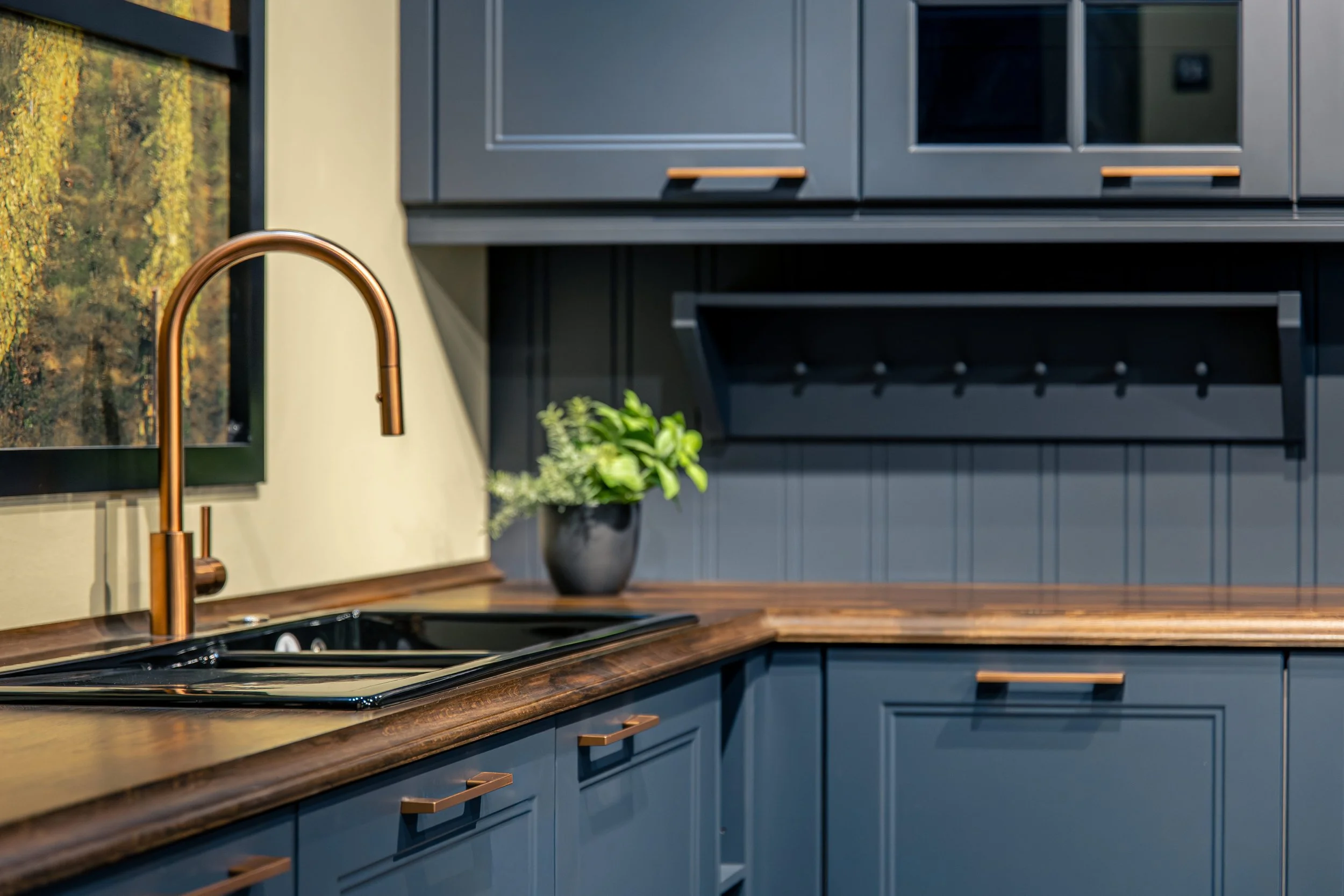
Cabinets and countertops set the tone for a kitchen, but hardware is what people actually touch every day. A pull that feels solid in the hand, a knob with a finish that holds up to years of cooking and cleaning, a hinge that closes with a quiet, solid click. That is the real difference designer kitchen hardware makes, and it is worth understanding before you start shopping. Let’s get into it.
What Counts as Designer Kitchen Hardware?
That term covers everything from cabinet knobs, pulls, and hinges, to functional pieces like drawer slides, all made by manufacturers who focus on craftsmanship, material quality, and original design rather than mass production. It’s the difference between a pull stamped out by the thousands and one cast, finished, and inspected by a smaller company that stands behind its work. This kind of hardware is usually sold through specialty showrooms rather than big box stores because it is meant to be seen, handled, and compared in person before you buy. A showroom also lets you hold a knob or pull next to your actual cabinet sample or paint chip, which is something a product photo online simply cannot replicate.
Why Does Kitchen Hardware Make Such a Big Difference?
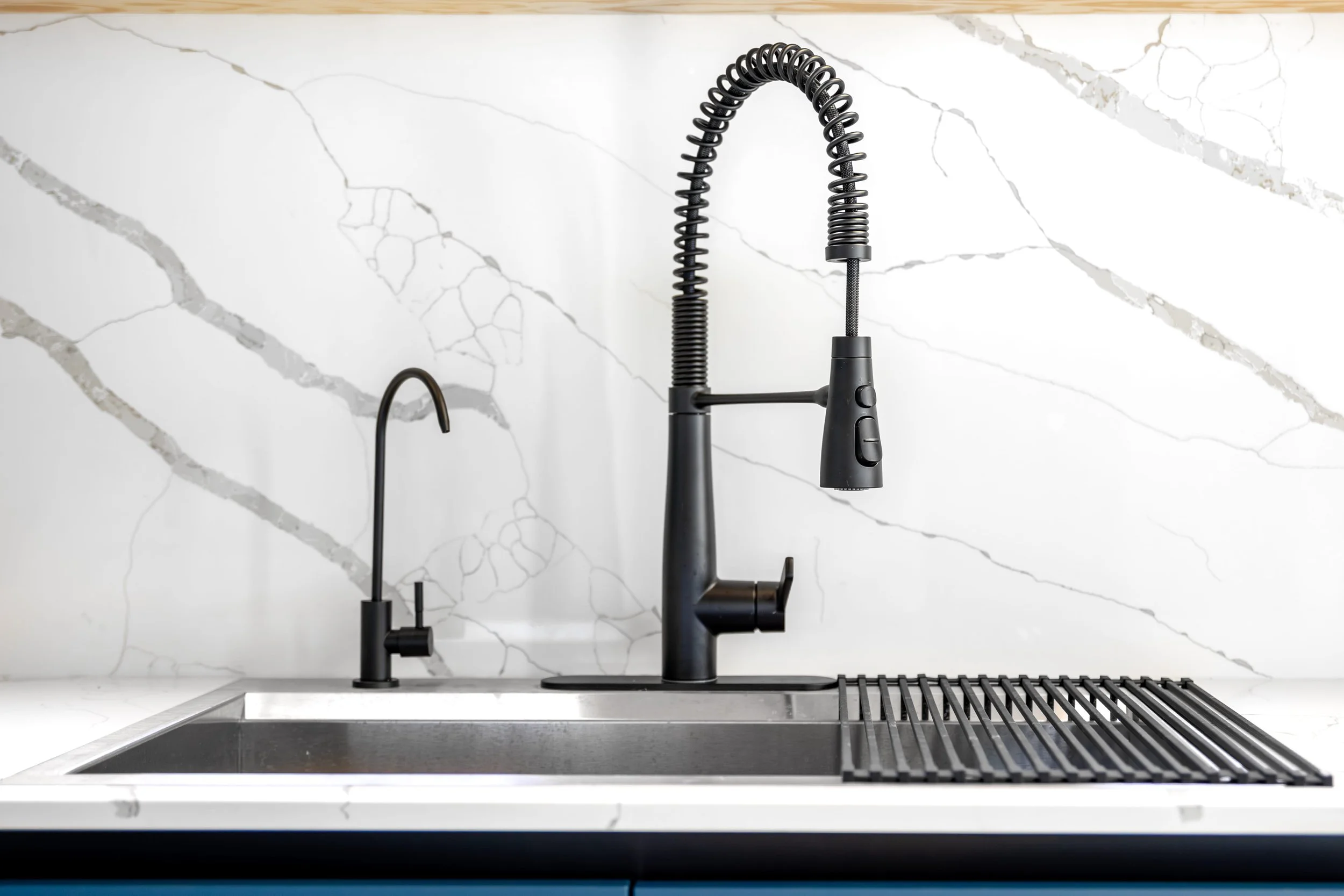
Hardware is the no.1 kitchen element you touch constantly, so its weight, texture, and finish shape how the whole room feels, not just how it looks in a photo. A well-chosen pull can make a simple cabinet door look custom. A mismatched or flimsy one can make an otherwise beautiful kitchen feel unfinished. Because hardware is also one of the more affordable ways to update a kitchen, upgrading is often the fastest way to change the character of a space without a full renovation. Swapping out builder-grade knobs for something with real weight and a considered finish can transform how a kitchen reads, even if the cabinets themselves stay exactly the same.
What Should You Look for in Designer Kitchen Hardware?
Start with how it feels. A well-made pull should feel substantial, with no sharp edges or rough casting lines. Check how the finish is applied, since a quality finish should be even and consistent across every piece you are buying, not just the sample. Ask about the base material too. Solid brass and bronze hold up differently than plated pieces over years of daily use, especially in a busy kitchen where hands are often wet or greasy. A plated finish can wear thin at the edges after a few years of constant use, while solid metal simply develops character, which is one reason solid brass and bronze pieces tend to carry a higher price, but a longer lifespan.
How Do You Choose the Right Finish?
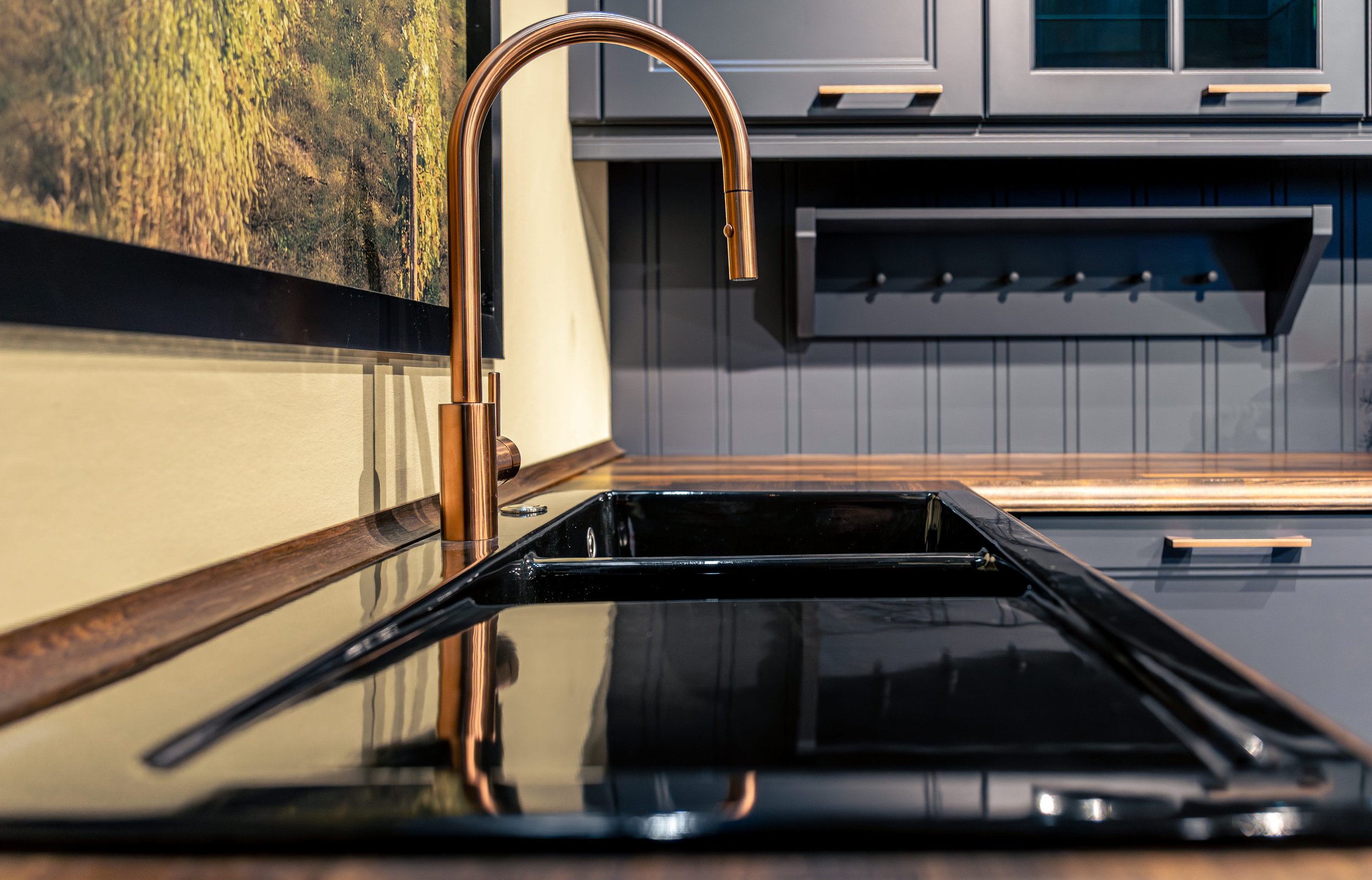
Finish should work with your other metals, not fight them. If your faucet and lighting already lean warm, think unlacquered brass or aged bronze, pick cabinet hardware that either matches that tone or contrasts with it on purpose, so the room doesn’t end up feeling disjointed. Unlacquered brass finishes develop a living patina over time, which some homeowners love and others prefer to avoid, so it’s worth asking a showroom to explain how a given finish will age before you commit to it across an entire kitchen.
Should Every Piece of Hardware in Your Kitchen Match?
Not necessarily. Many kitchens now mix finishes and styles on purpose, such as brass pulls on an island paired with a cooler nickel or black on the surrounding cabinetry for example. Or even knobs on upper cabinets with pulls on the drawers below for a practical reason as much as a visual one. What matters more than uniformity is that the hardware works as one system: hinges and drawer slides that operate smoothly and quietly, paired with knobs and pulls that hold up to daily use. Those functional pieces rarely get much thought during a remodel, but a soft-close hinge or a full-extension slide changes how a kitchen feels to use every single day, long after the finish on a knob has been decided. A good showroom will walk you through hinge and slide options with the same attention given to finishes, since a drawer that sticks or a cabinet door that slams undoes a lot of the finesse a beautiful pull is supposed to add. Think of hardware selection as outfitting the whole kitchen, not just accessorizing it.
How Long Should Designer Kitchen Hardware Actually Last?
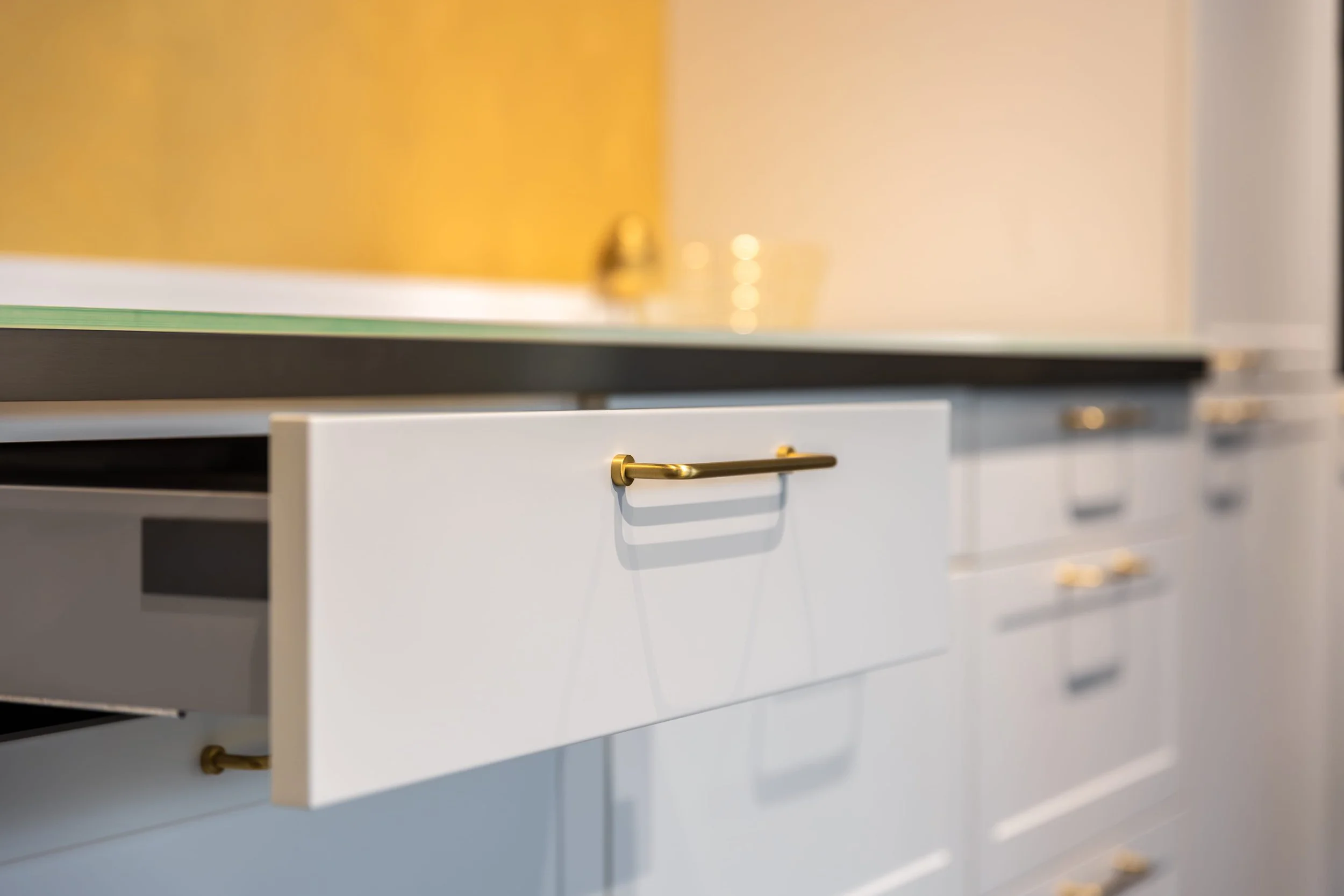
Well-made hardware is built to outlast at least one kitchen renovation cycle, often 15 to 20 years or more, without the finish wearing thin or the mechanism loosening. Having something made to last a long time is part of the value, since a homeowner who buys once rarely has to think about hardware again until they are ready for a new look entirely, not because something failed. Functional pieces like hinges and slides matter just as much here as knobs and pulls. A hinge that starts sagging or a slide that sticks after a few years of daily use is a sign of lower-quality materials, regardless of how good the piece looked on the day it was installed. Ask a showroom what warranty, if any, comes with a given line, since a manufacturer willing to stand behind hinges and slides for years is usually being honest about how the piece is actually built.
Where Can You Find Designer Kitchen Hardware in New York?
Elegance in Hardware and Bath operates two showrooms on Manhattan's Upper East Side. Our team works with contractors, designers, and homeowners across the tri-state area, including the Hamptons, Connecticut, and New Jersey, and carries premium manufacturers alongside specialty lines. With more than 50 years of combined industry experience on staff, the showroom offers a hands-on design consultation so you can compare weight, finish, and sizing in person before you commit. Stop by one of our showrooms to start finding the pieces that will make your kitchen last.