

Most people spend weeks choosing a paint color and about four minutes choosing hardware, usually at the very end of a renovation when the budget is pushing the limits and everyone's patience has grown thin.
Hardware is the one part of a room you physically touch every day, often dozens of times. A handle that feels light and hollow tells you something about a home before you have looked at anything else, and a handle with real weight behind it does the same in the opposite direction. The good news is that this is a forgiving detail to get right. Swapping hardware costs a fraction of what cabinetry or flooring costs, and it can lift a hallway of ordinary doors into something that feels considered.
Why do door handles for interior doors matter more than you think?
Designers talk about touchpoints, and hardware is the most literal one in the house that is responsible for tying a room together. When the handles change style from the bedroom to the study to the hall closet, the eye reads the house as a series of unrelated decisions rather than one coherent space.
In practical terms, interior hardware is in constant use. A privacy set on a bathroom door might be turned 10 times a day, every day, for 20 years. Solid brass or bronze internals will survive that. Zinc alloy with a thin-plated coating will start to loosen, rattle and wear through at the thumb contact point far sooner.
Should you choose a lever or a knob?
Levers open with a forearm, an elbow or a full hand, which makes them the accessible choice and the easier one for children, older relatives and anyone carrying laundry. Most modern and transitional interiors default to levers for exactly that reason.
Knobs require a grip and a twist, so they are harder to operate, but they read as more traditional and they sit flush against the door without catching sleeves or bag straps. They also suit narrow spaces where a projecting lever would collide with a door frame or an adjacent wall. Many homes use both, with levers on high-traffic doors and knobs on closets and secondary rooms.
Which finishes hold up in a busy home?
Polished chrome and polished nickel look immaculate in a showroom and show every fingerprint at home. Satin nickel and brushed brass hide daily contact far better, which is why they are most used in family homes.
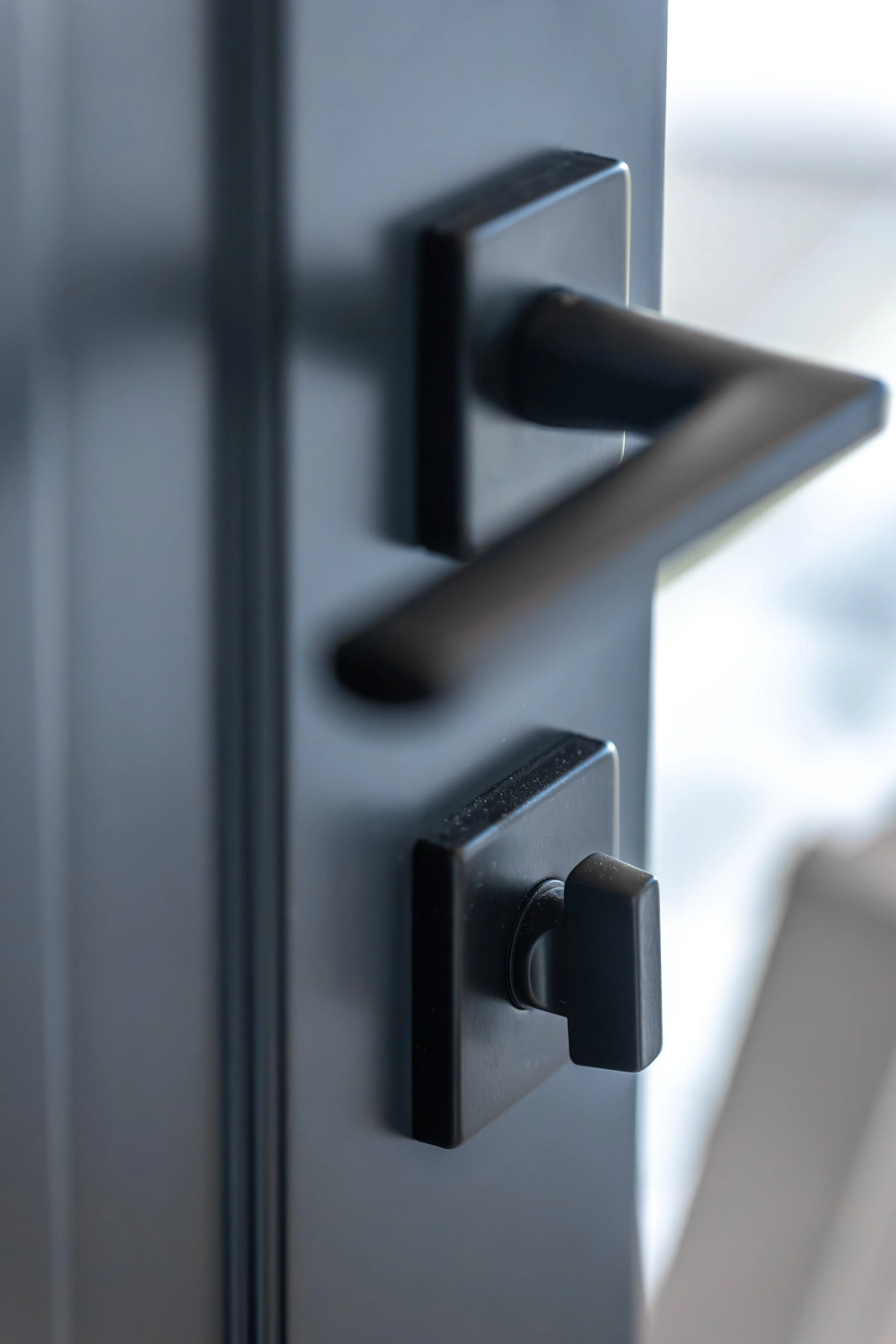
Matte black has become the default for contemporary interiors, though the quality range is wide. A powder-coated finish will chip at the edges over time, while a physical vapor deposition finish holds up considerably better. Unlacquered brass sits at the opposite end. It's meant to darken and mottle with handling, developing a patina that no factory finish can imitate. If you want a handle to look identical in five years, avoid it. If you want it to look lived in, it's an excellent choice.
What are seven interior handle styles worth considering?
Here are seven directions that work in real homes rather than only in photographs.
Solid brass lever. Warm, weighty and traditional. Works in period properties and softens minimal interiors that risk feeling cold.
Matte black lever. Pairs cleanly with black window frames, oak doors and pale walls.
Knurled handle. A finely textured grip that adds tactile interest without adding an ornate look. A small detail that people notice with their hands first.
Glass or crystal knob. Reflective, light and decorative. Beautiful on bedroom and dressing room doors, less suited to heavy daily use.
Leather-wrapped lever. Hand-stitched leather over metal, warm to the touch and unusual enough to feel unique. A signature choice for a study or a principal suite.
Minimalist satin nickel lever. Slim, unfussy and almost invisible. The right answer when the doors themselves are the feature.
Unlacquered brass knob. Starts bright, ages to something deeper and more complex. A living finish for people who like a house to show its history.
How do you match hardware to each room's function?
Interior hardware comes in three functional types, and mixing them up is the most common ordering mistake. Passage sets latch but do not lock, and belong on hallways, kitchens and living rooms. Privacy sets lock from the inside with a thumbturn, and belong to bedrooms and bathrooms. Dummy sets do not move at all, and are used on closet doors, pantry doors and the fixed leaf of a double door. Write the list room by room before you order anything.

What measurements should you check first?
Three numbers matter. Backset is the distance from the edge of the door to the center of the bore hole, most often 2 3/8 inches or 2 3/4 inches. Door thickness is usually 1 3/8 inches for interior doors, though older and custom doors vary. Bore hole diameter needs to match the new hardware or the rose will not cover the existing cutout. Measure two or three doors rather than assuming the whole house matches, particularly in an older property where doors have been replaced separately at different times. If you are moving from a knob to a lever, check the clearance between the handle and the door frame as well.
How do you keep interior hardware looking its best?
Very little is required, which is part of the appeal. Wipe finishes with a soft dry cloth, and avoid anything abrasive or ammonia based, since those strip lacquer and dull plating. If a lever starts to droop or a latch begins to stick, the fix is almost always a loose set screw or a spindle that needs seating, not a failed handle. Unlacquered brass is the exception. Leave it alone and it will darken naturally or, polish it occasionally and it will stay brighter. Neither approach is wrong.
Where should you shop for door handles for interior doors?
Hardware is one of the few things genuinely worth seeing in person, because weight, action and finish depth simply do not translate through a screen. At Elegance in Hardware, our Upper East Side showroom puts passage, privacy and dummy sets from makers such as Baldwin, Omnia, Merit Metal, Turnstyle Designs and Colombo Design in your hand, so you can compare a knurled lever against a leather-wrapped one before you commit. Our sales specialists bring decades of experience to interior door handles, and they will help you spec the right function and backset for every door in the plan. Visit us to start your selection.