
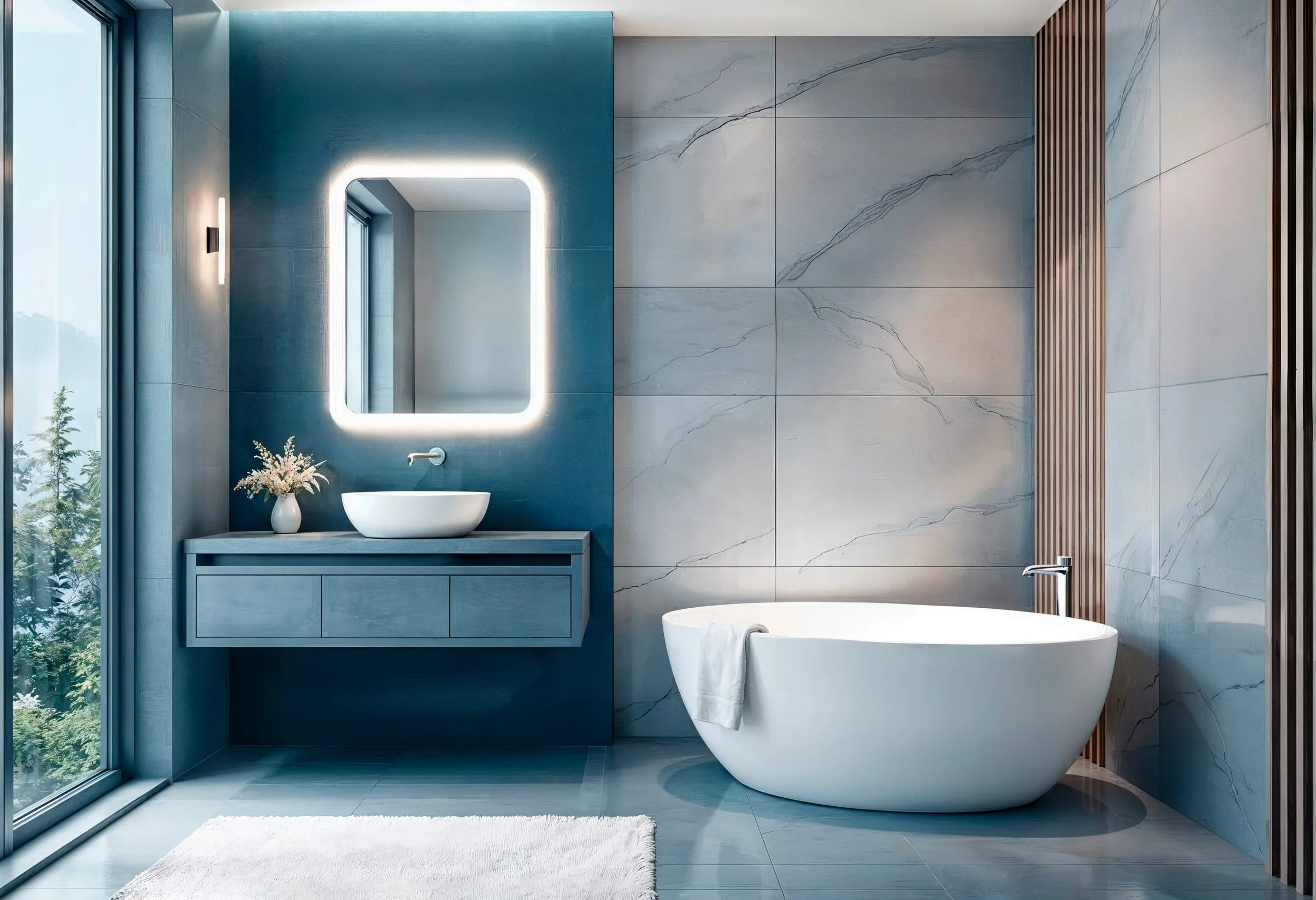
Ask 10 people what makes a bathroom feel luxurious and most will describe something visual. Stone, a freestanding tub, a wall of glass. However, where most bathroom budgets go wrong is when the photograph and the experience tend to get mixed up. Nobody has ever described a great bath by naming the countertop. What stays with people is sensory and specific, the sound of the water, the weight of the handle, the way the room held its heat long after they had stepped out of it A luxury bathing experience is built from things you feel rather than things you photograph, and the good news is that the felt things are usually cheaper than the visual ones. This is what we think a luxury bathing experience is made of.
What separates a luxury bathing experience from a nice bathroom?
A nice bathroom is well finished. A luxury bathing experience is well specified. Does the shower hold its temperature when the dishwasher fills? Does the faucet handle move with a smooth, weighted action, or does it wobble? Does the door close without a bang? Does the extractor fan run quietly enough that you would leave it on? None of these appear in a listing photo, and all of them determine whether the room is somewhere you linger or somewhere you are ready to get out of as quickly as possible.
Where should the budget actually go?
A useful rule is to spend on anything that carries water and anything your hands touch, then economize on anything decorative. Fixtures are the engine of the room. Tile, paint and cabinetry are the bodywork. A mid-range tile paired with an excellent shower system will give you a better experience every morning over imported stone paired with a builder-grade valve, and will still look good. When budgets get squeezed, the temptation runs the other way, since surfaces are what visitors comment on. Resist it.
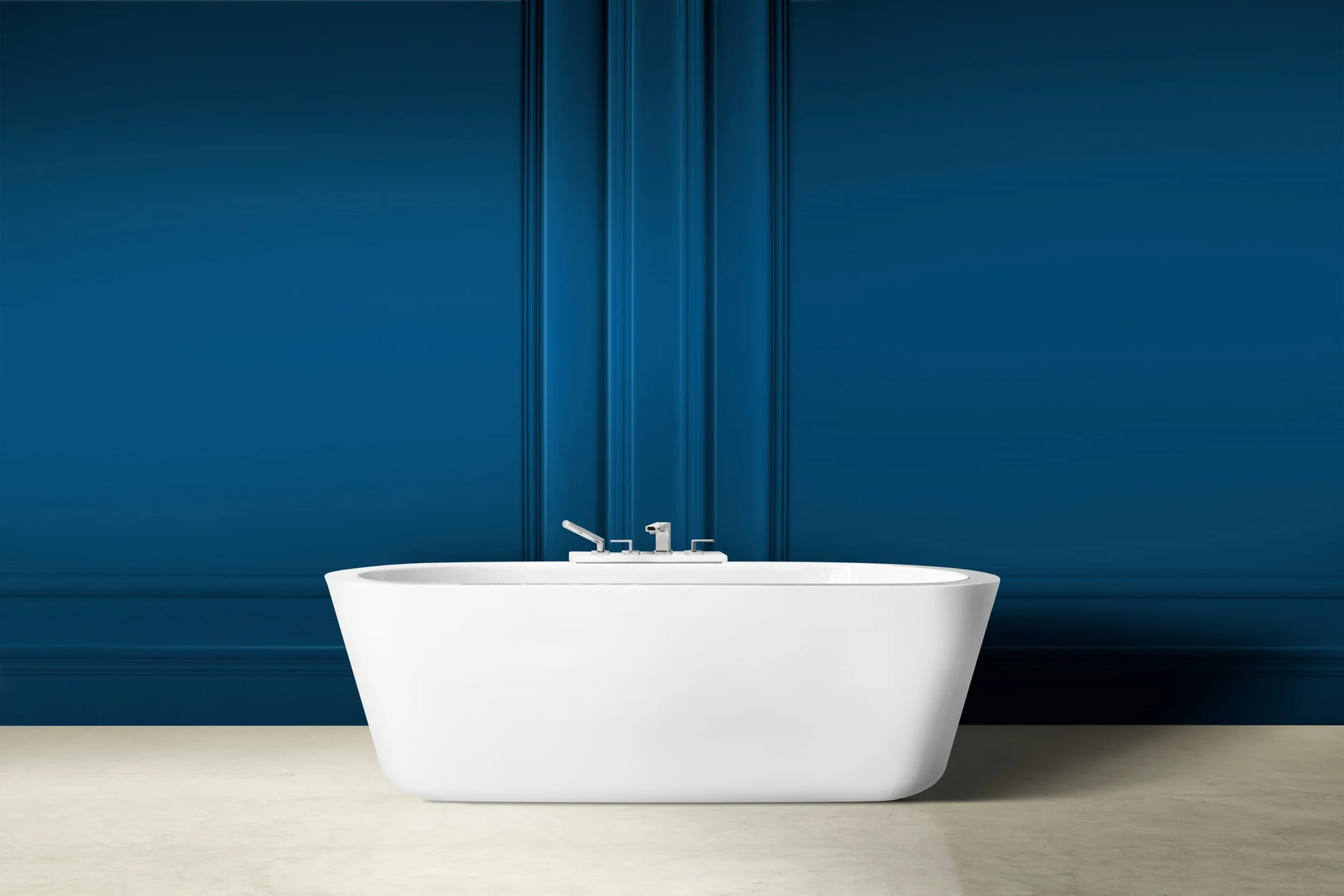
Which fixtures do you feel every day?
A short list, in rough order of how often you will notice them:
The basin faucet. Touched more than anything else in the house after door hardware. Weight, handle action and finish quality are all felt within a week.
The shower system. The single biggest contributor to whether bathing feels indulgent or merely efficient.
The towel bar or hook. Used every time, and a heated version turns an ordinary bath into something closer to a hotel experience.
The medicine cabinet. Opened twice a day, minimum. Soft-close hinges and proper interior lighting change the whole morning routine.
Bath accessories. Rings, hooks and holders in one coherent finish. Small pieces, but they are what your hand meets in the dark.
How much do pressure and temperature control matter?
More than anything else on the list. A thermostatic valve holds your chosen temperature regardless of what is happening elsewhere in the plumbing, which eliminates the flinch that follows a toilet flushing somewhere in the building.
Pressure deserves the same scrutiny. A rain head looks wonderful and delivers a soft, low-velocity spray, which some people love and others find underwhelming. Pairing one with a handheld on a separate outlet covers both preferences and makes cleaning the enclosure far easier. Check available pressure before specifying anything, because the most beautiful shower system in the world cannot invent water it is not being supplied with.
What role does lighting play?
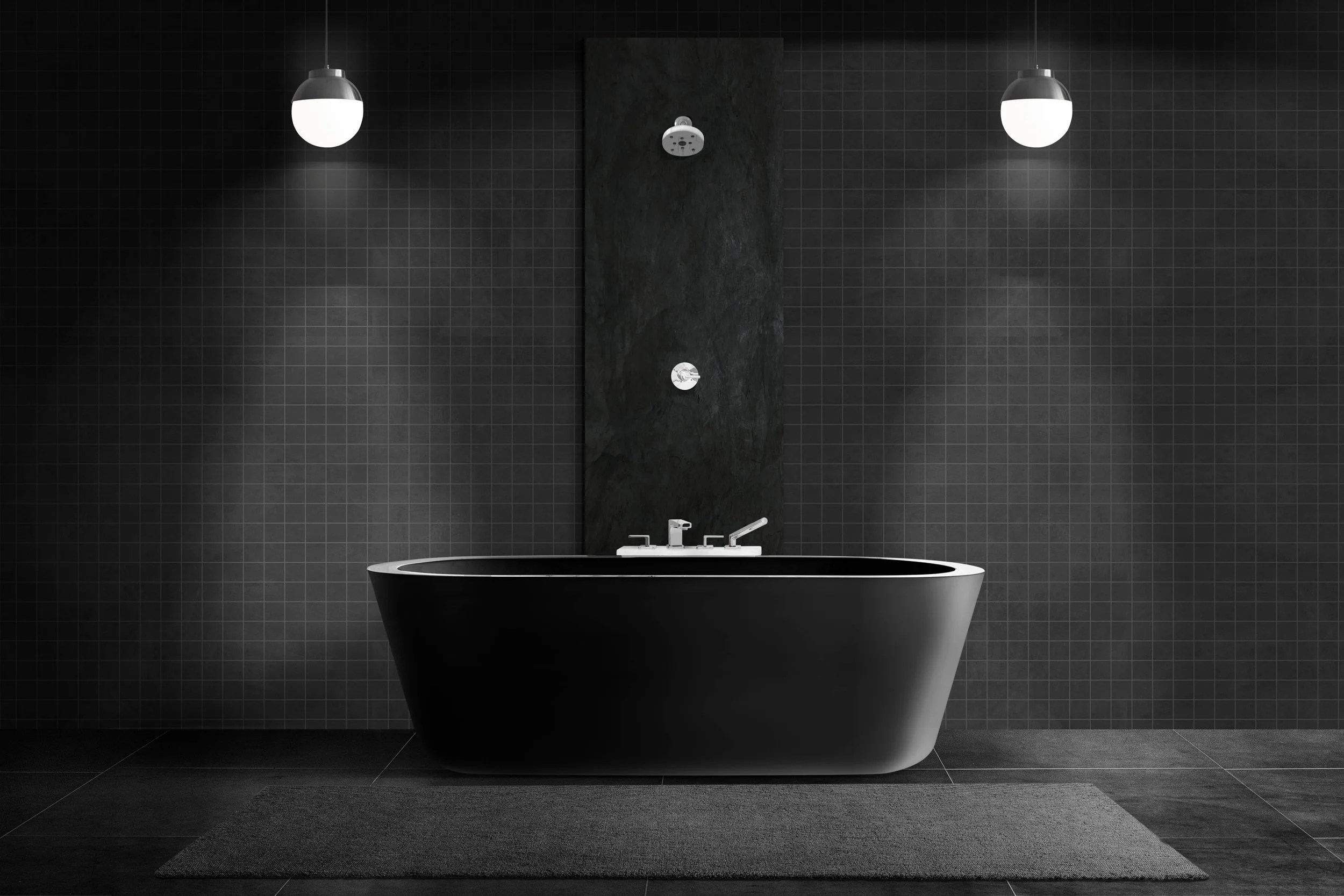
An enormous one. Overhead-only lighting casts hard downward shadows, which is unflattering at the mirror and clinical everywhere else. Look to place sconces at roughly eye level on either side of the mirror, and you get the same even, flattering light that hotels have been counting on for years. Add a dedicated shower light, then put the main circuit on a dimmer. The ability to drop the room to a low warm glow in the evening is what turns a functional space into genuine luxury bathing, and it costs a fraction of a stone countertop.
Which materials hold up over time?
Choose fewer materials and carry them further. Two surfaces used confidently look more expensive than five competing for attention, and they age better because there are fewer junctions to fail. On metals, pick one finish family and hold it across the faucet, shower system, accessories and door hardware. Each finish has something special going for it, whether it's the crispness of polished nickel, the warmth of aged bronze or the living quality of unlacquered brass, though that last one will patina, so know going in whether you love that or not. On surfaces, remember that grout is the maintenance story in any wet room, so a larger tile format with fewer joints will look better for longer with less effort.
How do you build the ritual, not just the room?
Heavier towels, a bath mat that feels pleasant underfoot, somewhere to set a glass down, a hook within reach of the shower rather than across the room. Think about what the room asks you to do. If the towel is three steps away, you will always be cold for three steps. If the light only has one setting, you will never take an evening bath in it. Small frictions decide whether a beautiful bathroom actually gets used the way you imagined. The same logic applies to storage. If the shampoo lives on the floor of the shower, the room will always look cluttered no matter what it costs. A niche at shoulder height, or a proper shelf, creates a sense of purpose, ease and intention to your experience.
Where should you begin?
Start with the fixtures, because they set the ceiling on everything else, and see them in person if you can. At Elegance in Hardware, our showroom lets you compare shower systems, lavatory sets, custom shower enclosures, medicine cabinets and bath accessories. Our specialists will help you put the budget where you will feel it every day. Visit us to get started.